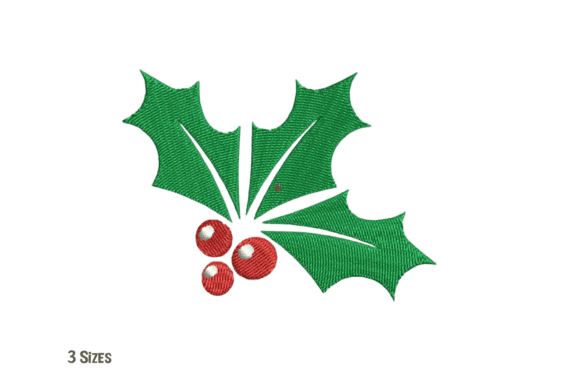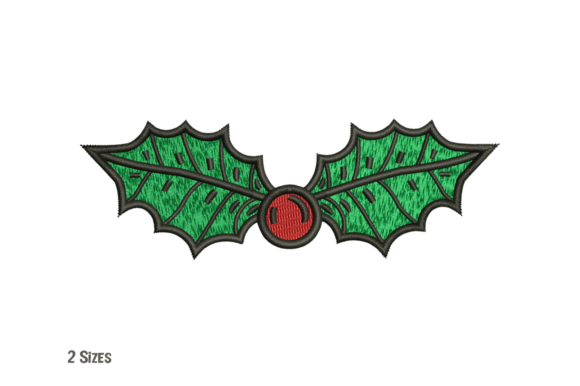
Christmas Leaves Embroidery Design
A Practical Review for Small Business Merchandise & Branded Patches
As an embroidery designer who’s developed and tested hundreds of machine embroidery designs for small businesses—from neighborhood bakeries to indie florists and pet boutiques—I approached the Christmas Leaves Embroidery Design with a very specific question: Does this work as functional brand expression—not just seasonal decoration? The answer is yes—but with thoughtful application.
First Impression: Elegant, Natural, and Professionally Balanced
The title and description—“nature-inspired elegance,” “beautifully stitched holly leaves,” “festive accents”—immediately signal a design that leans classic over kitschy, refined over rustic. It doesn’t scream “Santa” or “snow globe.” Instead, it whispers handmade care, botanical warmth, and quiet holiday intention. That’s gold for small business owners who want their branded merchandise to reflect authenticity—not generic cheer. Whether you run a ceramic studio, a slow-fashion label, or a local apothecary, this design feels like it belongs on your apron, tote bag, or staff cap—not just a tree skirt.
Real-World Performance Across Business Touchpoints
In practice, the Christmas Leaves Embroidery Design shines where subtlety meets recognition:
- Embroidered patches: Works exceptionally well as a 2.5"–3.5" woven or embroidered patch for jackets, tote bags, or product packaging. The holly leaf structure provides natural visual weight without overcrowding.
- Staff uniforms & aprons: Ideal for chest placement on cotton or linen blends—especially in cafés, boutiques, or craft studios. Its organic flow reads clearly at arm’s length but never distracts from service or craftsmanship.
- Cap embroidery: Performs best on structured front panels (not curved bill edges) when sized to 2"–2.25" wide. Avoid stretching it across full-front caps unless simplified first.
- Tote bag design & custom apparel: Scales beautifully to 4"–5" on canvas or duck cloth. The “festive accents” mentioned in the description likely add just enough detail to elevate a plain bag without overwhelming its utility.
- Product labels & boutique merchandise: Think gift tags, jar sleeves, or mini patches sewn onto handmade soap wraps. Here, the nature-inspired elegance reinforces premium positioning—and helps customers associate your brand with intentional, seasonal care.
Where to Use Christmas Leaves Embroidery Design with Intention
This isn’t a one-size-fits-all motif. To protect your brand’s professionalism and ensure production success, apply these practical filters:
- Avoid tiny patch sizes under 2": Holly veins and delicate accents may blur or disappear. Always test at intended scale before bulk ordering.
- Steer clear of high-curve surfaces: Cap bills, curved pockets, or tightly gathered seams can distort leaf outlines. Opt for flat or gently contoured zones instead.
- Check thread color contrast on dark uniforms: If using on navy or charcoal staff shirts, confirm the design includes sufficient stitch density and bold outlining—or adjust thread selection (e.g., metallic gold or cream on black).
- Factor in fabric texture: On heavy tweed, bouclé, or textured linen, consider lightening stitch density or adding underlay. Otherwise, detail may sink into the weave.
- Wash durability matters: For aprons or reusable totes meant for frequent laundering, verify that the design avoids overly fine satin-stitched areas that could snag or fray over time.
How This Design Strengthens Your Brand Identity
For small businesses, every stitch is a trust signal. The Christmas Leaves Embroidery Design supports long-term brand identity—not just holiday hype—because it’s rooted in timeless botanical language rather than fleeting trends. Customers recognize holly as symbolic, not commercial. When stitched onto your café apron or floral shop tote, it quietly communicates values: care, seasonality, attention to detail, and grounded creativity.
That consistency builds recognition. A customer who sees the same elegant leaf motif on your Instagram story, your staff’s cap, and your holiday gift wrap begins to associate it with your business—not just Christmas. And because it avoids cartoonishness or excessive glitter, it elevates perceived product value. Handmade product buyers especially respond to this kind of restrained, confident design—it tells them you invest in quality execution, not just quick novelty.
Essential Embroidery Designer Notes Before Production
Before you drop this digital embroidery file into your commercial embroidery workflow, here’s what I always do—and recommend you do too:
- Test in black and white first: Print a grayscale version to assess contrast, spacing, and silhouette clarity—no color distractions.
- Verify small-patch viability: Resize to your smallest intended use (e.g., 2") and check if stems, veins, or accents remain legible.
- Review thread color options: Does the design suggest specific palettes? Try warm olive + burgundy, sage + cream, or deep forest + silver—then test on fabric swatches.
- Inspect spacing and underlay: Tight leaf clusters need proper underlay to prevent puckering on knit or stretch fabrics.
- Confirm hoop size compatibility: Ensure your standard hoops (e.g., 4x4", 5x7") accommodate the design without re-hooping mid-stitch.
- Stabilizer strategy: Use medium-weight cutaway for stable wovens; tear-away + topping for textured or napped fabrics.
- Create a printable mockup: Show clients how it looks on actual garment photos—not just isolated files. Builds confidence and reduces revision rounds.
- Compare alongside other design assets: Does it harmonize with your logo, typography, and existing holiday patterns? Visual consistency keeps your brand feeling cohesive.
- Confirm commercial licensing: Since this is for small business merch, double-check that your purchase includes rights for resale, branded patches, and client-facing apparel.
The Christmas Leaves Embroidery Design isn’t just another holiday download—it’s a versatile, brand-forward tool for small businesses serious about meaningful, memorable merch. When applied with intention, it transforms everyday items—aprons, caps, totes, even packaging—into quiet ambassadors of your values. In a crowded market, that kind of thoughtful distinction doesn’t just sell products. It builds loyalty.