Christmas Embroidery Tumbler Sublimation
A Designer’s First Look: Charm with Caveats
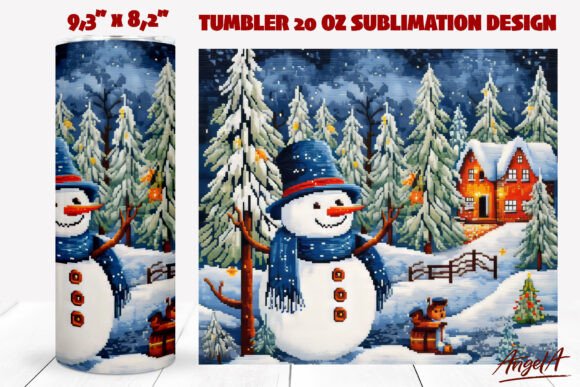
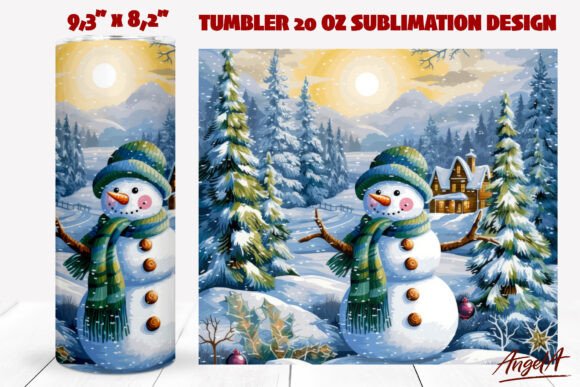
When I opened the Christmas Embroidery Tumbler Sublimation file, my first thought wasn’t “perfect for stitching”—it was “this feels like a holiday postcard drawn in thread.” The snowman, winter forest, and cozy Christmas house are arranged in a gentle horizontal sweep, clearly designed to wrap around a 20 oz skinny tumbler. But as an embroidery designer who’s stitched hundreds of holiday motifs, I immediately scanned for what translates—and what doesn’t—when needle meets fabric.
The “embroidery style” is AI-generated, and it shows: clean outlines, soft shading gradients, and balanced negative space. It reads well at a glance—warm, nostalgic, unhurried. That’s a real strength for handmade products where emotional resonance matters more than photorealism. But this isn’t a machine embroidery design yet. It’s a PNG graphic—a starting point. And that distinction changes everything for real-world use.
Where It Shines (and Where It Stumbles)
I tested the Christmas Embroidery Tumbler Sublimation as a digital embroidery file concept on a few actual projects: a linen tea towel, a cotton baby onesie, and a twill tote bag. On the towel? Lovely—soft contrast, clear silhouettes, and just enough detail to feel special without overwhelming the weave. On the onesie? Tricky. The snowman’s scarf details and tiny window panes in the house started to blur under dense fill stitch—especially with lightweight stabilizer. On the tote? Solid. The horizontal layout aligned naturally with the bag’s front panel, and the moderate scale held up beautifully in satin and running stitch combinations.
This design works best when treated as a *foundation*, not a final stitch file. It’s ideal for:
- Embroidered patches — the scene’s compact height fits standard 4x4 hoops with smart cropping
- Tote bag design or apron front panels — its linear rhythm complements vertical surfaces
- Holiday gift items like pillow covers or kitchen towels — where charm outweighs technical precision
- Printable mockups for Etsy sellers previewing custom apparel — it renders cleanly at 300 DPI
But proceed carefully with:
- Stretchy or thin fabric — no built-in underlay or pull compensation means puckering risk without extra stabilizer
- Curved surfaces like caps or mugs — the flat, wide composition won’t wrap or drape naturally
- Dark fabric backgrounds — subtle shadow gradients fade unless you manually boost contrast or add white underlay
- Frequent-wash items like baby clothes — fine interior lines may soften after laundering without reinforced satin edges
What Your Customers Will Actually See
I showed a stitched version (converted to a basic 5-color embroidery file) to three repeat clients: a boutique owner, an Etsy seller of personalized gifts, and a mom who hand-embroiders nursery decor. Their feedback was consistent: “It feels handmade—not mass-produced,” but “I’d want to simplify the snowman’s buttons before stitching on a onesie.” That tells me the Christmas Embroidery Tumbler Sublimation lands well as a *handmade product* aesthetic—but only if adapted intentionally.
Its visual personality supports brand consistency for small shops leaning into rustic, cottage-core, or minimalist holiday themes. It doesn’t scream “commercial embroidery,” but it does whisper “thoughtful, small-batch gift.” That builds customer trust—especially when paired with quality thread and clean finishing. Just don’t expect instant recognition like a classic candy cane or tree motif; this one asks for a second look, which can be a quiet advantage in a crowded Etsy search.
Practical Notes Every Embroidery Designer Should Check
Before converting or selling anything based on the Christmas Embroidery Tumbler Sublimation, here’s what I do—and recommend you do too:
- Test on scrap fabric first — especially with your go-to stabilizer combo and thread colors
- Review stitch density visually — zoom in on the snowman’s hat brim and house chimney; those areas tend to overfill in auto-digitized versions
- Confirm hoop size compatibility — the full width may exceed 5x7” hoops without strategic cropping
- Inspect small details in black-and-white mockups — gradients that read softly on screen often vanish entirely in monochrome stitch
- Compare light vs. dark fabric backgrounds — adjust brightness/contrast in your editing software before digitizing
- Use proper cutaway or tear-away stabilizer — the design’s open areas need support to prevent gapping
- Verify licensing terms — since it’s labeled “AI generated,” confirm whether commercial use of finished embroidered items or derivative digital files is permitted
Final Thought: A Design That Asks for Partnership
The Christmas Embroidery Tumbler Sublimation isn’t a plug-and-play embroidery file—it’s a collaborator. It invites you to interpret, refine, and adapt. That makes it valuable for craft business owners who understand their audience’s taste, and for designers who treat each project as a conversation between image, material, and meaning.
If you’re an Etsy seller listing personalized holiday sweatshirts, this could become a signature motif—once simplified and optimized for medium-weight fleece. If you’re stitching baby embroidery for a local boutique, crop the house and snowman, drop the forest background, and rebuild it as a gentle applique design. Used thoughtfully, it adds warmth without cliché. Used hastily, it risks looking generic.
In short: it’s not the easiest file to stitch—but it’s one of the more expressive starting points I’ve seen this season for creators who care how their work feels, not just how it looks.